

AI CUSTOMER SERVICE AGENT

Implementation of an AI-Powered Customer Service Agent at a Global B2B Manufacturer of Measurement Technology

How a mid-sized precision instrument company transformed its customer service operations—shortening response times, achieving growth without increasing staff, and improving customer satisfaction scores in 14 countries.

BACKGROUND AND CONTEXT

The company manufactures and distributes precision measurement devices—torque sensors, force measurement instruments, calibration systems, and data acquisition hardware—which are sold primarily to automotive manufacturers, aerospace suppliers, and industrial research laboratories. With a product catalog of over 8,000 items and a technically sophisticated customer base, the customer support team handled a complex spectrum of inquiries: ranging from pre-sales configuration questions, calibration requests, and software troubleshooting to RMA (Return Merchandise Authorization) processes. A team of 24 application engineers and service specialists processed incoming inquiries via email, telephone, and a legacy web portal. The average email response time was approximately 18 hours, a figure that extended to 3–4 days during peak seasons. Customer Satisfaction (CSAT) averaged 72 out of 100 points—an acceptable score, yet one that fell far short of the company’s own expectations and those of its competitors.

CHALLENGE

Despite strong technical products, the company faced growing pressure in customer service:

High Volume of Inquiries

Technical questions regarding calibration, installation, and conformity standards.

Fragmented Support

Regional teams using different tools and knowledge bases.

Slow response times

Particularly outside local business hours.

Partner dependency

The distributors lacked consistent access to up-to-date technical information.

Rising Costs

The global scaling of human support was expensive and inefficient.

SOLUTION DESIGN

The company has decided to introduce a comprehensive, language- model-based customer service agent that is deeply integrated into its existing CRM, ERP, and document management infrastructure. The agent was developed based on a strict tiered model—processing, escalation, or deferral—whereby every escalation is logged and reviewed to ensure continuous improvement. Key architectural decisions included the exclusive use of curated internal knowledge (product manuals, calibration certificates, service bulletins, and FAQ databases) rather than publicly accessible web sources; the enforcement of strict data classification rules to prevent unauthorized users from accessing export-controlled product details; and the integration of a manual review process for all inquiries regarding regulatory matters, price negotiations, or the scheduling of field service activities.

IMPLEMENTATION PROCESS
image

Investigation and data verification

Support tickets from the past three years were cataloged, the 200 most frequent inquiry categories were identified, and the 40 clusters with the highest frequency and lowest risk for AI automation were prioritized. The product documentation (18,000 documents) was cleaned and structured.

image

Pilot deployment - internal

The agent was introduced internally within the service team to undergo a stress test using real-world inquiries. The focus lay on calibration queries, compatibility questions, and tracking RMA status. A total of 1,200 manually verified interactions were recorded to establish evaluation benchmarks.

image

Pilot Project with selected customers

The AI ​​was introduced to 180 existing customers across three markets (Germany, the USA, and Japan). It operated in parallel with human employees; every AI response was reviewed prior to transmission. Tone, citation format, and escalation thresholds were optimized weekly.

image

Full production rollout

Expansion to all 14 markets and 6 languages. Elimination of manual reviews in Tier-1 categories. Integration with the CRM for context-specific account information. Introduction of real-time escalation routing and post-interaction customer satisfaction surveys.
RESULTS

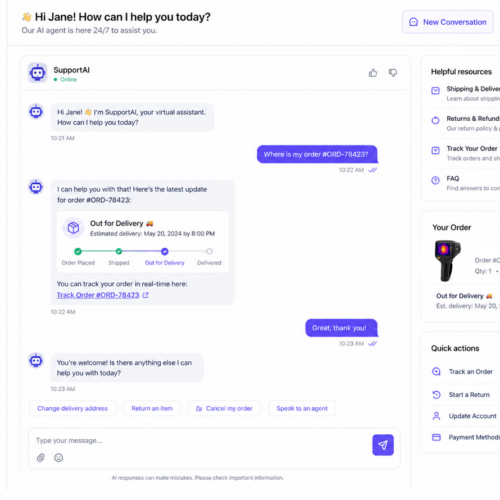
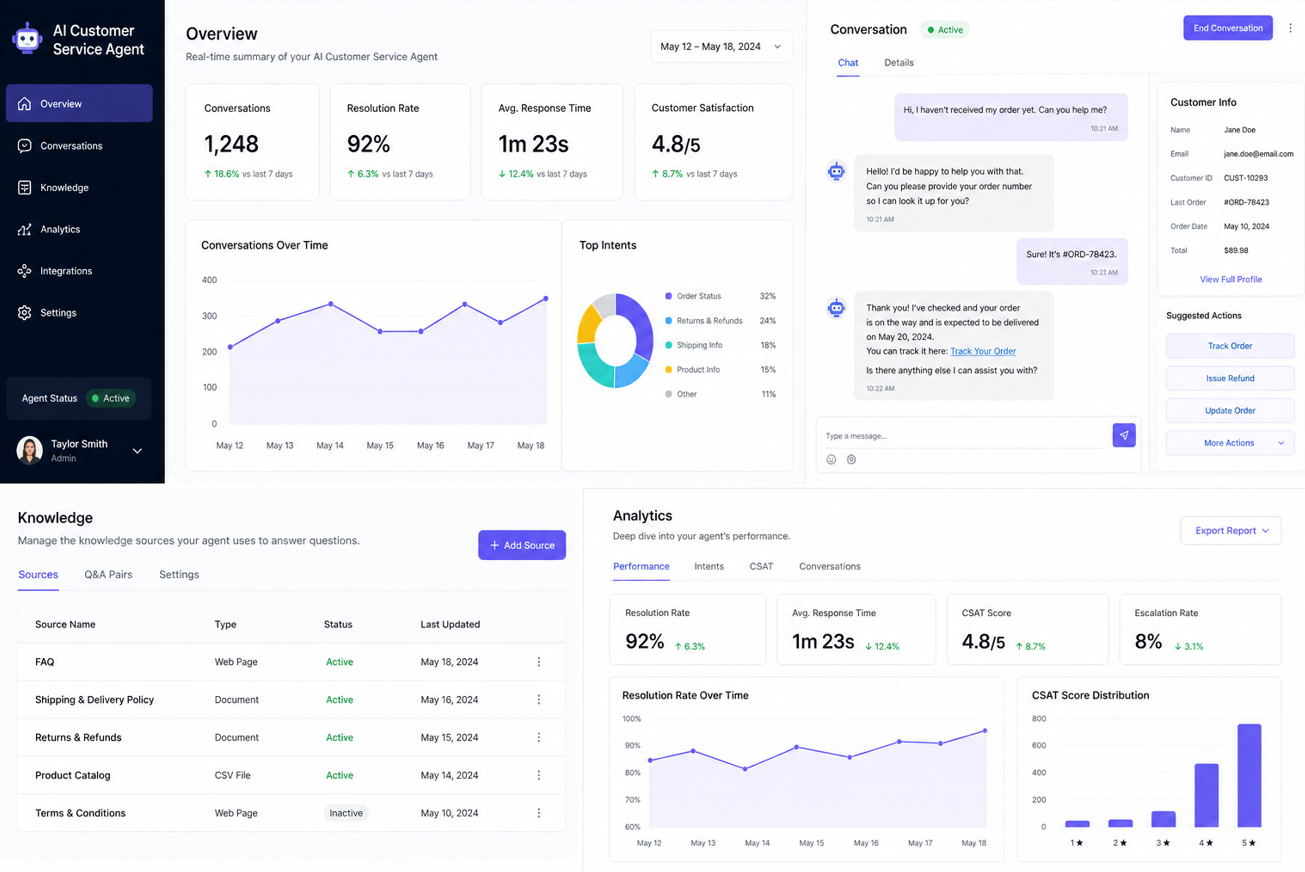
40% reduction in first-level support tickets

Significant cost savings in support operations

60% faster response times worldwide

+25% partner satisfaction through improved access to information

24/7 availability in all major markets

Stronger focus on complex, high-value customer inquiries

FUTURE ROADMAP

Integration with IoT devices for predictive support

Voice-enabled AI support for field service technicians

Deeper CRM integration for personalized responses

Expansion into the areas of sales support and lead qualification

Ready to automate what’s slowing you down?

Book a free  discovery call and get an automation assessment.

Data protection

This website uses cookies to provide you with an optimal user experience.

The cookie information is stored in your browser and performs functions such as recognizing your visit when you return to our website.

It also helps our team understand which areas of the website are particularly relevant and useful to you.